
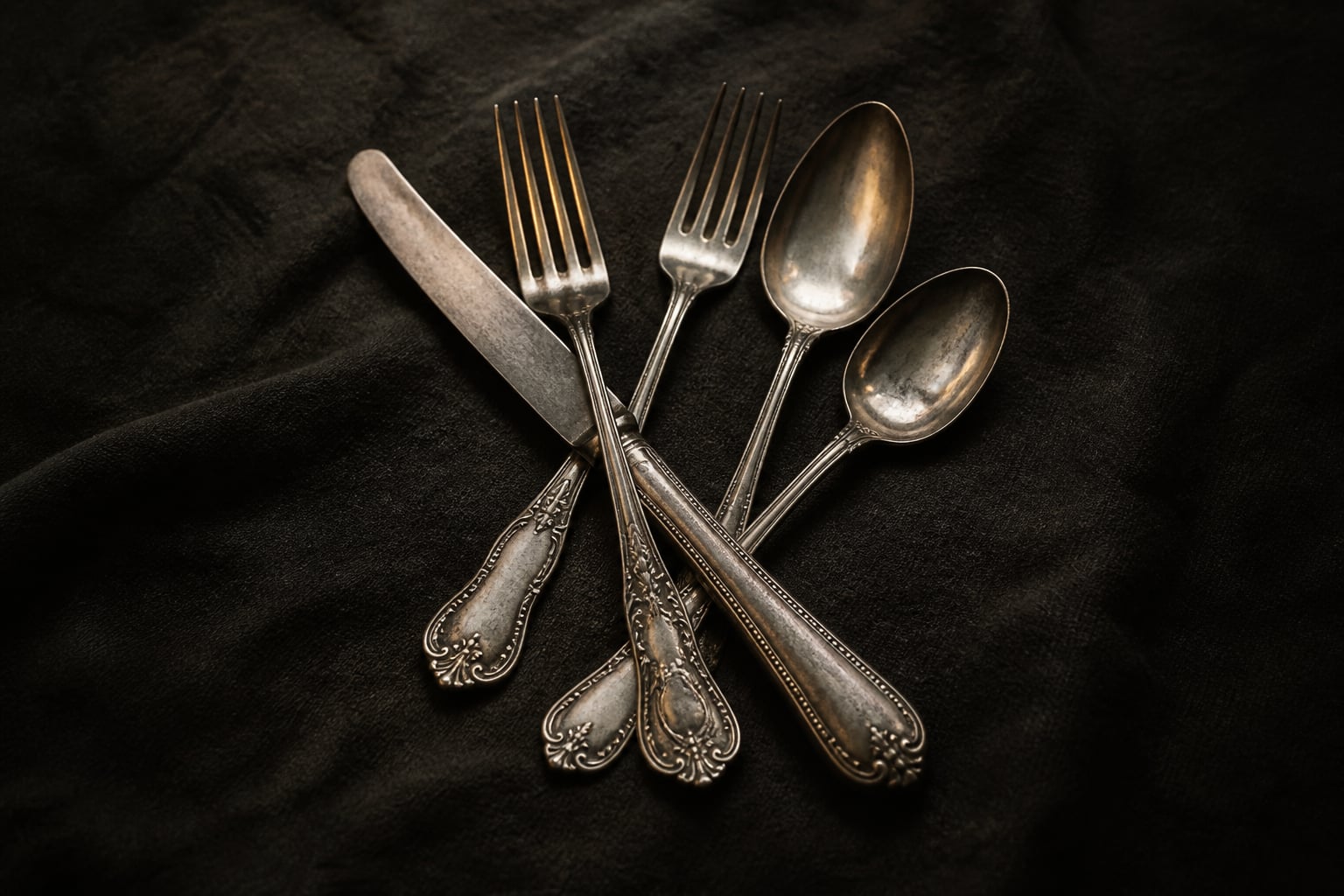
Separate sterling from silver plate
Sterling silver contains 92.5% silver; 925 is a common way of expressing that fineness. Silver plate is a surface layer on another metal. The FTC explains this distinction. Treat the mark as identification information to verify, not a substitute for examining the piece.
Check more than one spoon or fork in a set. Family collections can contain replacements from a different pattern or material. Group clearly marked pieces together and keep unmarked or uncertain items separate. Photograph the complete mark rather than only the maker’s name.
Reference sources: FTC — Precious metal markings
Why knives and weighted pieces need separate attention
A table knife can combine a precious-metal handle with a blade made from another material. A hollow handle or a weighted household object can also contain filler. Multiplying its entire scale weight by the sterling percentage would therefore overstate the amount of silver available.
Do not break handles, pull blades or dismantle candlesticks to find out. Ask the buyer how these objects will be assessed and whether they are priced individually or by an estimated recoverable-metal basis. Record them separately from solid spoons and forks so the final offer is easier to understand.
| Item group | Useful evaluation question |
|---|---|
| Solid spoons and forks | What is the verified alloy and metal weight? |
| Knives with mixed construction | How is the handle separated from the blade in the valuation? |
| Weighted or filled objects | What is excluded from the silver calculation? |
| Unmarked or plated pieces | Is there buying interest in this material or pattern? |
Ask about pattern value before accepting a metal-only offer
An identifiable set may be considered differently from a mixed group of damaged pieces. Record the maker, pattern if known, number of place settings and any serving pieces. Describe monograms, repairs and missing pieces rather than assuming they either destroy or guarantee resale value.
Ask whether the buyer is pricing the set for intact resale or for metal. A listing for one replacement fork is not a promise that a dealer will pay that retail price for every fork in your set. If complete-set resale matters to you, make that question part of the comparison before accepting an offer.
Prepare a manageable Miami evaluation
Count each type of utensil and make one overview photograph. Photograph a representative front and back, unusual serving pieces and any damage. Include the storage case in your description, but keep its weight out of metal calculations. There is no need to polish the entire service before asking for an initial assessment.
Contact Iron Eagle Reserve at 174 E Flagler St, Downtown Miami, with the approximate piece count and mark photos. Ask what to bring if the group is large or contains mostly plated items. For a confirmed offer, the actual pieces need to be examined. Keep your count sheet with the collection throughout the visit.
Your evaluation checklist
- Count spoons, forks, knives and serving pieces separately.
- Photograph marks and an overview of the set.
- Keep weighted, plated and uncertain items in separate groups.
- Ask whether the offer is for metal or for the intact set.
Frequently asked questions
Can a tarnished silver set still be evaluated?
Yes. You can show the pieces as they are. Clear photographs of the marks are more useful than polishing everything before the initial conversation.
Does a silver-colored knife count as all silver?
No. Mixed construction can include a different blade metal or filler in a handle. Ask how its eligible silver content is assessed.
Should I sell a complete set by weight?
Ask about both the material basis and possible intact resale before deciding. Maker, pattern, completeness and condition may affect buying interest.
Request an evaluation of your items
174 E Flagler St, Miami · Monday–Saturday, 9AM–8PM. English and Spanish available. Final offers are confirmed after examining the item.
Request an evaluation