
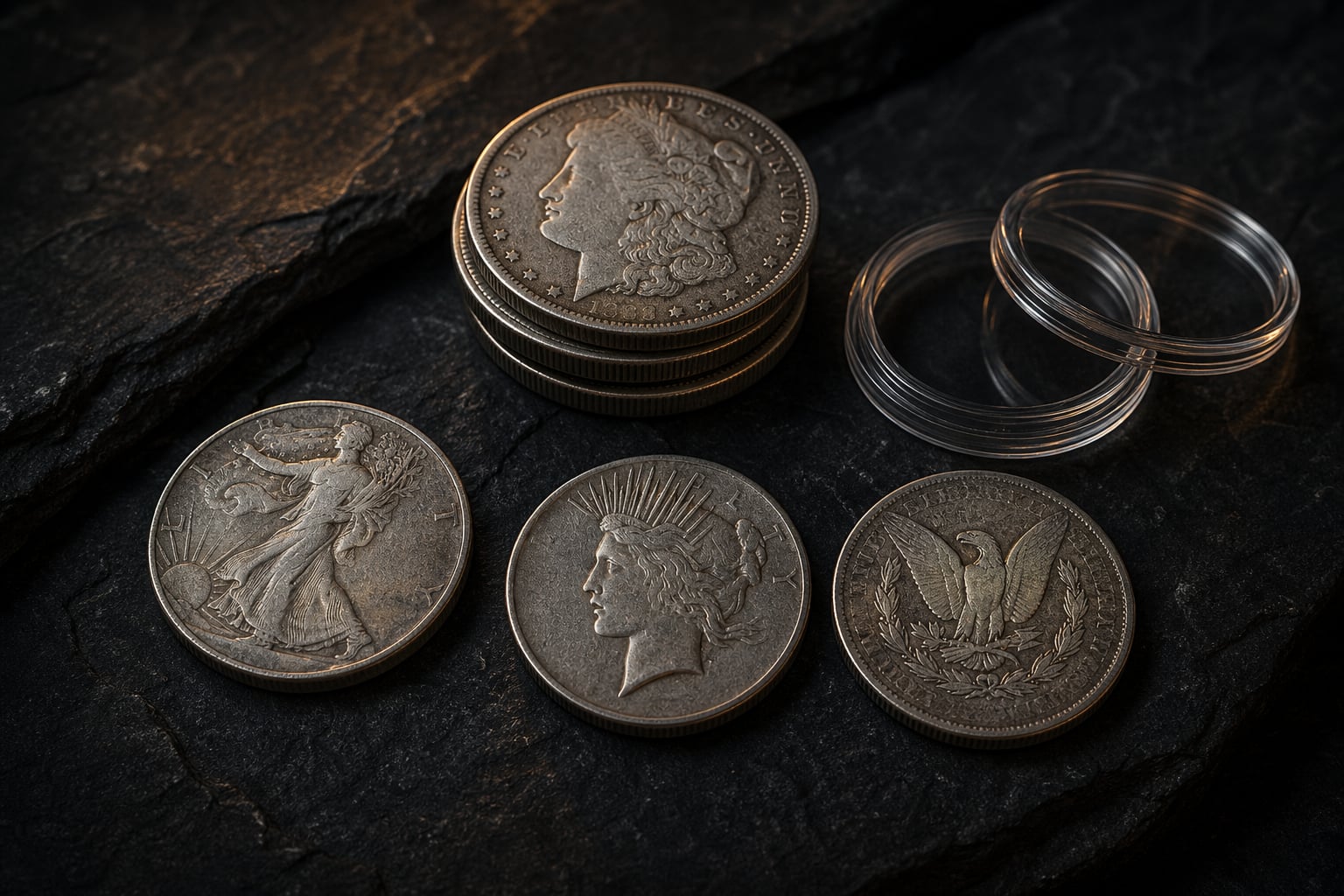
Sort common U.S. coins by date and denomination
Common U.S. dimes and quarters dated 1964 or earlier are a familiar silver group. Kennedy half dollars require a separate date check: the 1964 issue is 90% silver, while the 1965–1970 issues are 40%. Later collector issues can differ from ordinary circulation coins. The U.S. Mint documents the transition to clad coinage.
Use these groups for preliminary sorting only. Older types, unusual dates, commemoratives and proof issues deserve individual identification. Do not apply a dime or quarter rule to every nickel, dollar coin or foreign coin. A family label on a roll is helpful background, but its contents still need checking.
Reference sources: U.S. Mint — Historic coin production · U.S. Mint — New half-dollar composition
Separate metal value from collector value
A bullion-style offer is based mainly on verified silver content and the buyer’s pricing terms. A collectible offer may also depend on date, mint mark, condition and rarity. These are different questions: how much silver is present, and whether a collector would pay for this particular coin.
Keep graded coins in their holders and put unusual pieces aside before accepting one price for the entire lot. A price-guide entry is not a standing cash bid. Ask whether the buyer identified individual collectible pieces or treated the group solely as common silver. If the answer is unclear, request a breakdown.
Do not polish the coins to improve the offer
PCGS explains that cleaning can affect coin surfaces and collector acceptance. Household polish and abrasive rubbing are not a safe way to prepare collectible coins for sale. Preserve the current surfaces while you seek identification.
Handle unprotected coins carefully by their edges, separate them to limit rubbing and keep existing labels with the relevant items. Avoid removing a coin from a sealed grading holder to take a photograph. Photograph both faces through the holder and include a clear view of its label.
Reference sources: PCGS — Coin cleaning and condition
Compare offers with the same units and item count
One buyer may describe an offer per coin, another per face-value dollar for a defined group, and another by metal weight. Ask for the total amount for exactly the coins you presented. Face value is the denomination printed on a coin; it is not the weight of silver and should not be confused with a dollar price per ounce.
Before visiting Iron Eagle Reserve at 174 E Flagler St, send an overview and tell us whether you have U.S. circulation coins, bullion or graded collectibles. Keep foreign coins and unknown pieces separate. An in-person examination establishes the material and the basis of any final offer.
| Record | Why it matters |
|---|---|
| Denomination and visible date | Identifies the starting group. |
| Quantity by group | Lets you compare matching lots. |
| Holders and labels | Preserves grading and collection information. |
| Total net offer | Avoids comparing unlike pricing units. |
Your evaluation checklist
- Sort coins by country, denomination and date.
- Keep graded holders and old collection labels.
- Do not polish, scrub or chemically clean the coins.
- Compare the same groups and total net payment.
Frequently asked questions
Are all silver-colored U.S. coins made of silver?
No. Many circulation coins use other metals. Identify denomination, date and issue rather than relying on appearance.
Should I clean old coins before an appraisal?
Avoid household cleaning or polishing. It can change the surfaces and affect collector value; show the coins as they are.
Can I bring a mixed collection?
Yes, start by describing the groups and approximate quantity. Keep unfamiliar, foreign and graded pieces separate for individual review.
Request an evaluation of your items
174 E Flagler St, Miami · Monday–Saturday, 9AM–8PM. English and Spanish available. Final offers are confirmed after examining the item.
Request an evaluation