
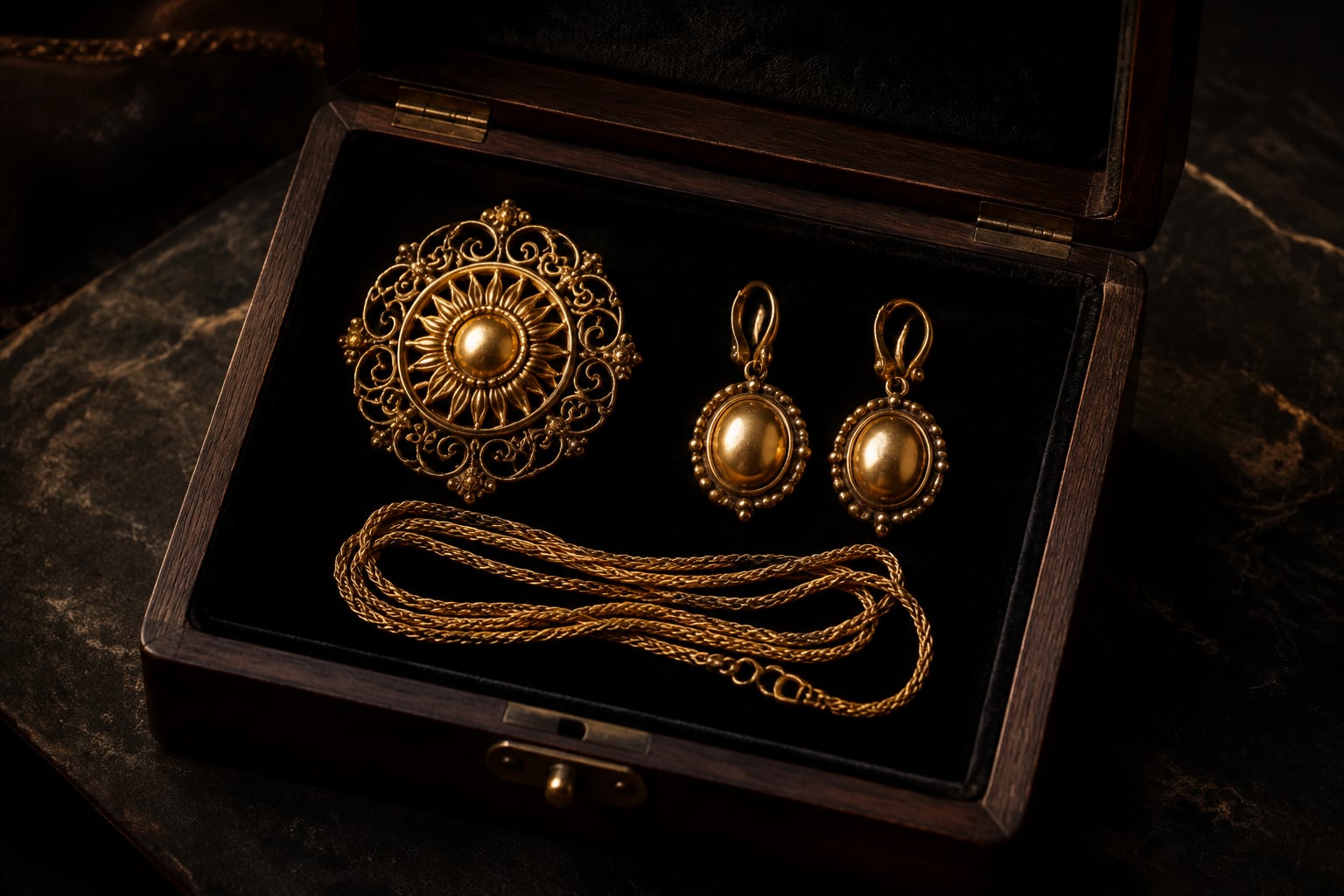
Start with an inventory, not a bulk price
Lay out the collection on a soft surface and give each item a temporary number. Photograph that number beside the item, then record a short description: yellow-metal chain, ring with blue stone, pair of earrings or signed bracelet. An uncertain description is better than identifying an unknown stone incorrectly.
Keep pairs, detachable parts, boxes and documents together. Create three groups: items to keep, items to evaluate and items whose ownership needs clarification. If you are handling an estate or selling on behalf of another person, establish your authority before proceeding. An item’s presence in a family home does not by itself settle who may sell it.
Separate a purchase offer from a formal appraisal
A purchase offer tells you what a particular buyer is prepared to pay. A formal appraisal can serve a different purpose, such as documenting value for an estate or insurance. GIA recommends discussing the purpose of an appraisal with the appraiser before commissioning it.
Ask in advance what document you need and who needs to accept it. If an attorney, insurer or estate representative requires a report, a store’s purchase quotation may not meet that requirement. Iron Eagle Reserve’s buying evaluation should not be treated as a substitute for an independent legal, tax or insurance valuation.
Reference sources: GIA — Choosing an appraiser
Ask how each group is being valued
For ordinary precious-metal pieces, request the tested metal and weight basis. For recognizable signed jewelry, gemstones and collectible pieces, ask whether the item is being considered for resale intact. A single blended number makes it harder to see whether an important item has been overlooked.
You can request separate figures for a ring, a group of chains and a watch. This makes it possible to sell only part of the collection. Avoid dismantling settings, cutting chains or polishing signatures before an evaluation. Keeping the collection organized preserves your ability to ask a second buyer about the same items.
| Group | Record before your visit |
|---|---|
| Gold and silver jewelry | Visible marks, number of pieces and any known repairs. |
| Gemstone pieces | Existing reports and clear pictures of stones and settings. |
| Signed or antique jewelry | Maker marks, boxes, receipts and family records. |
| Watches | Model information, spare links and service documents. |
Compare net offers and make a deliberate decision
Write down which items each offer covers, the net amount, any inspection conditions and the proposed payment method. Keep your inventory with you when pieces are counted. If you decide not to sell an item, confirm that it has been removed from the final transaction.
For a Downtown Miami evaluation, contact Iron Eagle Reserve at 174 E Flagler St. Send an overview photo and say whether the group includes jewelry, watches or silver tableware. You can discuss the collection in English or Spanish. You do not need to sell every item simply because you brought it for review.
Your evaluation checklist
- Photograph and number the items.
- Separate keepsakes and items with unresolved ownership.
- Match boxes, reports and receipts to individual pieces.
- Request separate offers for materially different groups.
Frequently asked questions
Should I clean inherited jewelry before selling it?
You do not need to make the collection look new. Keep pieces organized and avoid abrasive polishing, alterations or taking stones out before an evaluation.
Can I sell only some of the collection?
Yes, request offers for clearly identified items or groups. Confirm the exact items included before accepting a transaction.
Does an old appraisal guarantee the current sale value?
No. Its date, purpose and assumptions matter. Bring it as background information and ask how the current purchase offer was determined.
Request an evaluation of your items
174 E Flagler St, Miami · Monday–Saturday, 9AM–8PM. English and Spanish available. Final offers are confirmed after examining the item.
Request an evaluation