
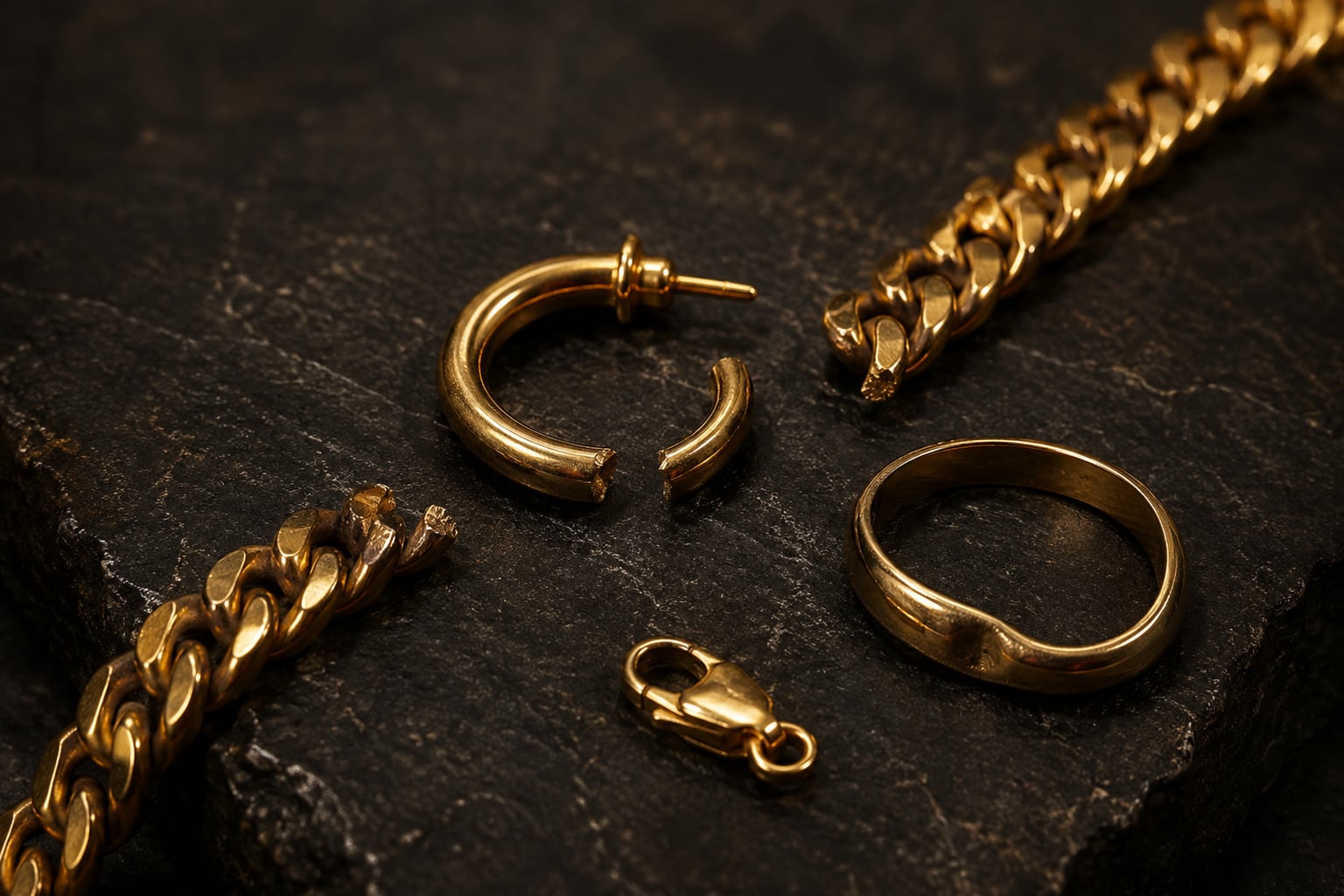
What to bring from your jewelry box
Gather broken chains, single earrings, damaged rings and detached clasps in separate small containers. Bring the other part of a broken item if you have it. A loose pendant and its chain may not have the same purity, even if they were purchased together.
Tell the buyer about stones, springs, non-gold fittings or earlier repairs. Do not assume the scale weight of a mixed bag is all gold. Photograph the group before your visit so you can keep track of each piece and decide whether to sell everything or only selected items.
Why the stamp is a starting point
Look for a karat mark and record it without scratching or filing the jewelry. A worn stamp, an unmarked piece and a marked clasp attached to a different chain each deserve examination. Gold plating and gold-filled construction are not the same as a gold alloy throughout the item; bring these separately if you are unsure.
The buyer should explain how the material was identified. Ask before any test that would leave a mark. If the result differs from the visible stamp, ask which part was tested and how the result affects the weight or price calculation. A clear explanation is more useful than a vague promise of a high payout.
Reference sources: FTC — Precious metal markings
Follow the calculation from weight to offer
For a simple metal-only example, suppose 10 grams of eligible metal tests as 18K. Its theoretical fine-gold content is 10 × 18 ÷ 24 = 7.5 grams. Multiplying that content by a reference price per gram produces a metal reference value, not a guaranteed buying offer.
An actual offer can reflect processing costs, deductions, margin and whether the item will be resold intact. Ask for the total net payment rather than judging only the advertised rate. Do not multiply the weight of stones or a non-gold component by the gold price.
| Record | Example or question |
|---|---|
| Eligible metal weight | What weight remains after excluded components? |
| Purity | Which karat group was used? |
| Reference basis | Per gram or per troy ounce, and at what time? |
| Net offer | What amount would I receive for these exact pieces? |
Should you repair a broken chain before selling?
If the item is evaluated for metal, a repair may add an expense without increasing the amount you receive. If it is a recognizable designer piece or a wearable item with resale demand, condition may matter differently. Ask for an assessment as-is before deciding.
Iron Eagle Reserve buys gold jewelry in Downtown Miami at 174 E Flagler St. You can start with photos and explain that the items are broken or incomplete. Bring them together for an in-person evaluation and use the gold page to understand the reference prices and calculator. A calculator estimate remains separate from a confirmed offer.
Your evaluation checklist
- Keep broken parts and earring backs together.
- Separate items by visible marks without assuming those marks are conclusive.
- Ask for weight, purity and the net amount.
- Discuss repairs only after an as-is evaluation.
Frequently asked questions
Can I sell one gold earring?
A single earring can be evaluated. Bring any matching back or detached part and ask which components count toward the metal weight.
Is broken gold worth less per gram?
For the same verified purity, damage does not change the gold fraction itself. A complete wearable item may have additional resale value, so compare the valuation method as well as the weight.
Should I remove stones first?
No. Present the item intact and ask how stones are handled in the evaluation before authorizing any removal.
Request an evaluation of your items
174 E Flagler St, Miami · Monday–Saturday, 9AM–8PM. English and Spanish available. Final offers are confirmed after examining the item.
Request an evaluation