
Selling gold in Miami is straightforward when you know what you're doing — and very easy to get wrong when you don't. The difference between a fair offer and a low one isn't the buyer's honesty. It's your preparation.
This guide covers everything: how gold is priced, how to pick a buyer, what to bring, and what the appraisal process actually looks like at a licensed Miami gold buyer.
Whether you have a single gold ring or a collection of chains, coins, and dental pieces — the process is the same. This guide is written by the team at Iron Eagle Reserve, a licensed gold buyer at 174 E Flagler St in Downtown Miami. Every figure, step, and recommendation reflects how transactions actually work at our counter.
Know What Your Gold Is Worth
Before you walk into any buyer, spend five minutes on the basics. Gold is valued by two things: weight (grams) and purity (karat). A 10-gram piece of 14K gold is 58.5% pure — meaning 5.85 grams of that weight is actual gold. At today's spot price (shown in the strip above), that content has a specific dollar value called melt value. Specialist gold buyers pay 85–95% of melt value. Pawn shops typically pay 40–60%. On a single 14K chain weighing 15 grams, the difference between those two percentages can be $150–$250 in cash. That gap comes entirely from choosing the right type of buyer — not from luck or negotiation. Use the live rates above to estimate your piece before you go. You don't need to be precise — even a rough calculation tells you whether an offer is in the right range.
Full gold price breakdown →Choose the Right Type of Buyer
Not all buyers are equal, and the type of business matters more than the name on the door. Pawn shops are generalists — they trade in electronics, tools, and jewelry alike. Gold is one category among many, which means staff may not specialize in precious metals and their margins require lower per-transaction offers, typically 40–60% of melt value. Jewelry stores focus on pieces they can re-price and resell; mismatched or broken gold gets melted regardless, so offers tend to be conservative. Online gold buyers add shipping risk and remove any ability to test in person or negotiate. Specialist gold buyers — licensed precious metals dealers — focus entirely on gold and luxury assets. They invest in professional testing equipment (acid kits, XRF analyzers) and operate transparently in front of you. Their business model depends on volume and repeat clients, which is why competitive offers are the norm. In Miami, ask any buyer whether they operate under Florida Statute Chapter 538 — licensed dealers are required to.
Compare Miami gold buyers →Prepare What to Bring
Florida law requires a valid government-issued photo ID — driver's license or passport — for all gold transactions. This is not optional. Licensed dealers under F.S. Chapter 538 must record this information and submit daily transaction logs to local law enforcement. The process takes 30 seconds and protects both parties. Bring everything you want appraised in one trip: chains, rings, coins, dental crowns, broken clasps, single earrings. Even small pieces add up — a bent 14K ring might weigh 4 grams, worth $30–$45 in gold content today. Do not remove gemstones from their settings before arriving. A specialist evaluates the gold setting and the stones together; removing stones risks damaging the prongs and the stone itself, and a specialist can often recognize when a piece has value above its melt weight. If you have original receipts, appraisal certificates, or documentation for branded pieces such as Cartier, Tiffany, or Bulgari, bring them — they can support an offer above melt value for collectible items.
The Appraisal — What Actually Happens
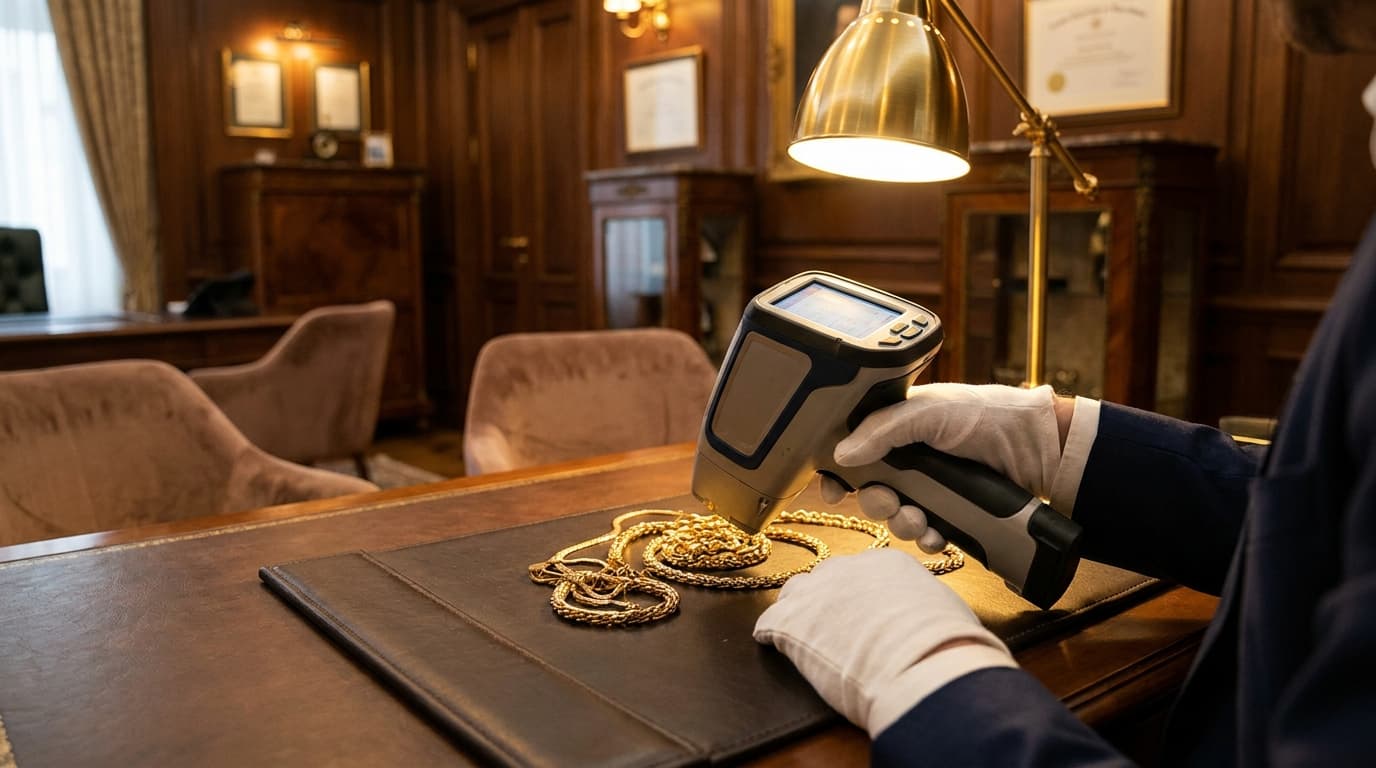
A professional appraisal at a licensed dealer is transparent from start to finish. Here is the exact sequence: first, each piece is weighed on a calibrated digital scale — you stand at the counter and see the number yourself. Second, purity is tested. The two standard methods are acid testing (a small surface is lightly scratched, a specific reagent is applied, and the reaction reveals the karat — a reliable, well-established technique) and XRF analysis (a handheld device reads elemental composition without surface contact). At Iron Eagle Reserve, both methods are available. Third, the offer is calculated using today's spot price, the confirmed karat, and the weighed grams — and the math is presented to you before you decide anything. The entire process for a standard collection takes 15–25 minutes. Red flags at any buyer: appraisal happens in a back room you can't see into, the scale display faces away from you, or an offer is made without visible testing. Those are reasons to leave, regardless of the number being offered.
Accept or Walk Away
A reputable buyer never pressures you. The appraisal is always free — there is no obligation to accept. If you accept the offer, you receive cash the same visit, before you leave the counter. If you decline, your gold is returned exactly as you brought it. Many sellers visit two or three buyers before committing. That is completely normal, and any buyer who pushes back against comparison shopping is telling you something important about how they operate. One practical note: if you plan to get multiple quotes, try to do it within the same trading day. Gold spot prices shift throughout the day, so an offer at 10AM and one at 3PM may reflect different market prices rather than different buyer quality. When comparing offers, ask each buyer to show you the weight reading, the karat result, the spot price they used, and the percentage of melt value they are offering. A transparent dealer shows you all four. Any part of that math being withheld is a reason to walk.
Every Form of Gold Accepted
Jewelry, coins, bars, dental gold, scrap — if it has gold content, it has cash value. Condition doesn't matter.
- Necklaces, chains, bracelets
- Rings, earrings, pendants
- 10K, 14K, 18K, 21K, 22K, 24K
- American Eagle, Krugerrand
- Gold bars & ingots
- Pre-1933 US gold coins
- Broken or damaged pieces
- Dental crowns & bridges
- Gold wire, filings, nuggets
What Florida Law Requires From Buyers
Florida Statute Chapter 538 governs dealers in secondhand precious metals and gems — the legal framework that covers licensed gold buyers operating in Miami. Understanding what the law requires from buyers tells you what to expect as a seller and makes it easy to identify whether you are dealing with a legitimate operation.
Iron Eagle Reserve operates as a licensed dealer under F.S. Chapter 538. Every transaction is recorded, every weight is visible at the counter, and every purity test happens in front of you. If a buyer at any location refuses to show you their scale reading or testing process — that is a reason to leave, regardless of what they are offering.
What Affects the Price You Receive
The base calculation — spot price × weight × purity — is fixed by the market. But several variables will push your offer higher or lower within any given buyer's range. Understanding them helps you maximize what you walk out with.
Not Ready to Sell?
Get a Gold Loan Instead.
If you need cash but aren't ready to permanently part with your gold, a collateral loan lets you access its value without selling. We hold your gold securely, fund you the same day, and return it when you repay — no credit check, no bank involvement, no public record.
5 Mistakes That Cost Sellers Money
These are the most common avoidable errors made by first-time gold sellers in Miami — and how to avoid each one.
The difference between a pawn shop offer and a specialist offer on a typical gold chain is often 30–40% of the total cash value. Spending an extra hour visiting two buyers can add $100–$300 to your payout depending on the weight involved. Most reputable buyers encourage comparison shopping. A business that pressures you to decide immediately is signaling that they don't want you to find out what others will offer.
Sellers sometimes remove diamonds or colored stones before arriving, thinking it simplifies the appraisal. It does the opposite. Loose stones are harder to evaluate for origin, treatment, and quality. Removing them also risks damaging the prong tips and the stone itself. A specialist evaluates the gold setting and the stones in context — together, a complete piece may be worth significantly more than its components separated.
Bent chains, single earrings, damaged clasps, and broken pendants all contain gold. The metal content doesn't diminish with condition. A single broken 18K bracelet weighing 8 grams still carries real melt value at today's prices. Dental gold — crowns and bridges — is frequently overlooked but is genuine gold and will be tested and paid accordingly. Bring everything you have, regardless of condition.
Some gold coins — particularly pre-1933 US gold pieces, limited-edition commemoratives, and certain international bullion coins in uncirculated condition — are worth meaningfully more than their gold content to collectors. Before selling coins to a gold buyer, a brief online search for the specific coin name and grade is worth the ten minutes. A trustworthy specialist buyer will also flag any coin that may have collector value above its melt price.
Gold prices do fluctuate, and selling during a period of elevated spot prices does produce a better offer. But if you need cash now, holding out indefinitely for the "right" price is rarely the smart move — gold can drop as easily as it rises, and the timing is genuinely unpredictable. At Iron Eagle Reserve, we display live market rates on arrival so you can make an informed decision based on today's actual numbers, not a forecast.
Is there sales tax when I sell gold in Florida?
No. Florida does not collect sales tax on the sale of investment-grade gold, silver, or platinum coins and bullion. Selling gold to a licensed buyer like Iron Eagle Reserve is a straightforward cash transaction with no tax implications for the seller.
What if I don't know the karat of my gold?
That's completely normal — we test purity for free, right in front of you, using acid testing or XRF analysis. You'll know the exact karat before we make any offer. No prior knowledge required.
Can I sell just one small piece?
Yes. There's no minimum. A single ring, a dental crown, or one broken chain still has real cash value. We evaluate everything regardless of size.
Do I need to clean my gold before bringing it in?
No. Cleaning changes nothing about the weight or purity test. Bring it as-is. We've seen everything — tarnished, dirty, bent, broken. The metal content is what we're paying for.
How long does the whole process take?
From the moment you walk in to cash in hand: typically 15–25 minutes for a standard appraisal. Multiple pieces or a larger collection can take a bit longer. We work efficiently and don't waste your time.
Can I get a loan instead of selling?
Yes. If you'd prefer to keep your gold and get cash temporarily, we offer collateral loans secured by your gold or luxury watch. No credit check, no credit impact. You get funded the same visit and retrieve your piece when you repay.
Can I sell gold I inherited, with no original paperwork?
Yes. Inherited jewelry and heirlooms are among the most common items we appraise. You do not need original receipts, appraisal certificates, or purchase history. A valid government-issued photo ID is all that Florida law requires. We evaluate the gold content and condition — not where it came from.
What happens to my personal information after the transaction?
Under Florida Statute Chapter 538, your transaction record — including your ID information — is submitted to local law enforcement as part of standard dealer compliance. This information is not sold, shared with third parties, or used for marketing. It exists solely for legal compliance purposes and is retained by the dealer as required by statute.